Sunday, January 28, 2018

Current Film Review: A Futile and Stupid Gesture

      About two years ago, I watched a documentary called Drunk, Stoned, Brilliant, Dead, a look into the National Lampoon magazine during its rise and height during the 60's and 70's. It was interesting, if a bit self-congratulatory, seeing how this magazine came to influence a lot of the comedy of the late 20th Century. It's influence can be seen from its lucrative film licensing to its prominent writers and editors (PJ O'Rourke, John Hughes, Al Jean and Mike Reiss of The Simpsons), to the number of its talent that would go on to help create Saturday Night Live. However, the documentary had very "greatest hits" feel, looking only at the best of it, and never its low points (aside from a brief mention of Disco Beavers from Outer Space) . My particular criticism is that doesn't explore the end of the Lampoon to any degree. It just blames it Christian conservatives, and not (based on my reading), a decreasing reader base and a consortium of businesses that simply took the brand (applying to a number of sub-par, "found on a Blockbuster shelf" films), and neglecting the magazine. Still, it was interesting and enjoyable enough that I was exciting for Netflix's biopic of Doug Kenney, the founder of the Lampoon. Though, the time in which the film gestated took a while, and there was no real release date until about a month ago. Now that I've seen it, it was enjoyable overall, but not necessarily a great or even particularly good film. Let me tell you why.

     Based on Josh Karp's biography of the same name, the film tells the true story of Douglas C. Kenney (Will Forte) from the perspective of an hypothetical older Kenney (Martin Mull), who didn't die in 1980 (That's not a spoiler. You can find that fact in about five seconds) . As a Harvard freshman from Chagrin Falls, Ohio, he befriends a fellow student, Henry Beard (Domhnall Gleeson). Together, the two become the lead editor of Harvard's humor magazine The Harvard Lampoon, and release a very successful parody of Lord of the Rings (Bored of the Rings). However, Doug finds his after-college prospects daunting, so he comes up with the idea of a nationwide version of the Harvard Lampoon. After convincing Beard to come on board, they shop around the idea of a humor magazine, until they sign a deal with publisher Matty Simmons (Matt Walsh). They assemble a team of writers and editors, including Michael O'Donoghue (Thomas Lennon), Anne Beatts (Natasha Lyonne),  Tony Hendra (Matt Lucas), and PJ O'Rourke (Nelson Franklin). While having a shaky start, the magazine becomes incredibly successful, and eventually spawns a radio show, starring such talent as Gilda Radner (Jackie Tohn), Bill Murray (Jon Daly), John Belushi (John Gemberling), and Chevy Chase (Joel McHale) (Like I said, a lot of the talent went on to work for SNL). However, in spite of his massive success, Kenney finds that his own personal vices are growing. Incapable of handling those vices and success and work only compounding them, he finds himself at odds with the people closest to him, and his own personal state is deteriorating.

      The film has a couple of good points. The main cast does well, with Forte, Gleeson, and McHale as particular stand-outs. McHale does a good impression of 70's era Chevy Chase (probably helped by the two of them working on Community together). It had some very funny moments, particularly in its metatexual nature. The older Kenney often breaks the fourth wall and discusses the events in meta sense, (and even lists the various parts of the film that weren't true at one point). There was also the interesting gambit where in place of the typical biopic looks into the protagonists deteriorating state, are a bunch of sketches reminiscent of the Lampoon's dark humor streak. Some of these work well, some less so, but it is ambitious and unexpected.  The behind-the-scenes stuff was interesting, if a bit un-detailed. The dramatic moments work well (especially how it makes Kenney's death a mystery, much how it is in real life), along with the comedic ones

    Remember how I said that this was greatest hits? Yeah, it just mostly drives through the most notable moments of Kenney's tenure at the Lampoon, but with little to no look into how they were formulated or the real production behind them. We get only a very brief mention of Bored of the Rings towards the beginning, the radio show and many of the most parodies are only glanced at, and most notably, the production of Animal House and Caddyshack are skimmed over. Key moments, and they are barely explored. None of the memorable scenes or jokes are shown. Also skimmed over were a lot of the famous faces. Aside from Chevy Chase (which is likely because of his major role), most of the other writers, editors, and actors are not given much development, and kind of disappear towards the third act. While each of the original writers are given little introductions, they end up underdeveloped. Some of the other major players (PJ O'Rourke, Ivan Reitman, Harold Ramis, Lorne Michaels) are given little to no introduction.  A lot of the later SNL actors come off more as impressions than real performances of these people, especially John Belushi. Another big problem was that the film would vary wildly from standard biopic about famous figure and their accomplish, and a strange, surreal dark comedy. Parts from both work at times (as I said earlier), but when put together, come off haphazardly and feel a bit off as a result.

      Despite the less-than-satisfying way the film handles its subject, this was fairly enjoyable and fun for the most part. If you have a Netflix account, and are interested by what I have written, or are interested in the comedic that would influence the many comedies of the past 50 years, I recommend this. It's only an hour and a half anyway, so no real investment of time is necessary.

Monday, January 1, 2018

Top Films of 2017

So, another year has passed, and we all know what that means: another Top Films list.  Another recount of the rules. This is all the films I saw between January 1st and December 31st, that were first released to a wide audience. If a film came out in a festival in 2016, but only came out to general audiences in 2017, it counts. Sadly this means that some awards contenders will not be on, since those don't come here until January. Once again, these are only films that I saw this year. My list once goes from the worst film I saw at the very beginning, and the films improve in quality until we reach the best film of the year. So without further ado....

Worst Film of 2017
The Space Between Us
Source: https://en.wikipedia.org/wiki/File:The_Space_Between_Us_poster.jpg

       I watched this in February, and I just knew that nothing could possibly beat it out as worst of the year. 10 months later, and despite at least one close contender, that prediction has held out. This does everything wrong. Its story relies on a number of contrivances and doesn't hold up under scrutiny. Its lead is dull and bland, and lacks consistent (or any) characterization, as don't any of the other characters. It is shot like a commercial or a low-budget PSA. It is not remotely memorable or interesting in any way. I don't quite know how else to describe it. It is really bad, in ways at times I can't even describe. Not for spoilers, but you might not believe me.

Bad

November Criminals 

Source:https://upload.wikimedia.org/wikipedia/en/6/6f/November_Criminals_%28film%29.png

     You'll be happy (or indifferent) to know that this finally garnered enough reviews to have a Rotten Tomatoes score of 0%. (One may call it the anti-Lady Bird). I already laid into this film pretty harshly, and even then, I might have been too kind on it. You really have to see this to understand how botched the whole thing is. (Do not see this, I'm merely illustrating a point). The choices made both with the filmmakers and the characters within the film are bizarre and inexplicable. It comes off like a mixture of a Lifetime movie and an old ABC Afterschool Special, with a bit of an added white savior narrative to boot. It is strange, in most awful way possible.

Ghost in the Shell


    Even if you take the anime out of this, what you get is a really boring, pretentious, and overall forgettable film. It is everything bad about modern blockbusters, from its over-use of CGI, its misuse of an iconic source material, and especially its dull action. The worst part was that, while it took various parts of the anime and manga (most of which I hadn't seen), it clearly didn't adopt any of themes of technology or memory or intelligence that were present in the original franchise, yet it still expects that its surface level exploration of these topics are sufficient enough. It also is incredibly boring, and like I said in my review, I almost fell asleep watching it. I suppose it's good for insomniacs. 

Life


       You know what really sinks this film? Not that it was just a generic creature feature that thought itself some deep meditation on extraterrestrial life, but it was a bad creature feature. One with dumb characters, a very generic looking alien, a distinct lack of tension or horror, and a really obvious twist ending (paired with a very odd song choice for the ending credits.) How this Syfy original movie came out with an all-star cast in theaters is beyond me. In a year of decent horror, this is the stand out in terrible.

American Assassin 


   Okay, I checked, the book this was based on was written in 2010. Odd, considering this feels like something made in 2006. This film definitely wears its Tom Clancy-lite origins proudly, I'll say that. I'd actually might have had some deeper problems with the narrative, had it not also been  incredibly boring and confusing. The lead, uh...Dylan O'Brien lacks charisma or any definable personality, Michael Keaton is mostly wasted, and I frankly can't tell you a single thing that happens in this. Not because I can't remember, but even sitting there in the theater, I couldn't tell you what happens in it. Or that I actually cared. 


A Cure For Wellness


   This might be the controversial choice, but frankly, I hated this movie. It is nearly 2 and a half hours, but nothing is really accomplished. The narrative constantly changes, it's incredibly inconsistent, the scary imagery adds nothing, I can barely remember what happens in it. This felt pointless. Nothing actually mattered, and there wasn't anything to make you care about what is happening. The only thing keeping this high is that I saw this on an airplane, which is probably the most appropriate setting to watch this. 

Meh

Justice League


        Like I said, it's better than its two predecessors, which actually makes it less interesting. I feel that, if I were to talk about the specific problems of this film, I would be repeating myself from either earlier in the list or my own review of this. Really, it's exactly what most people were expecting. A overwrought, ugly looking film that Warner Bros had tried to salvage and ended up making it far worse. After the promise that Wonder Woman showed, that was the true disappointment. But, it made its money back, so we might be getting more of these. To leave on a note of optimism, maybe they'll learn their lesson. (Or not, given the DCEU track record.)

Downsizing 

Source:https://i0.wp.com/teaser-trailer.com/wp-content/uploads/Downsizing-movie-poster.jpg?ssl=1

       This goes into the category of "wasted potential". This was a high concept science fiction satire, directed by Alexander Payne. A recipe for a potentially great film. What we get is middling at best. It doesn't seem to find much of a plot, instead going from non-sequitur to non-sequitur. We learn nothing about the character we're following, the downsizing process is underutilized, and the lesson feels tacked on, and not what the film was building up to. A real disappointment from Payne, who was known for smart, interesting commentary in previous films, but really comes up short here. 

Free Fire
Source:http://t3.gstatic.com/images?q=tbn:ANd9GcSQkl_myF0IWyWS1g2GHLP7qiKJuYNvPpUg-XxYa17XJyG7ECig

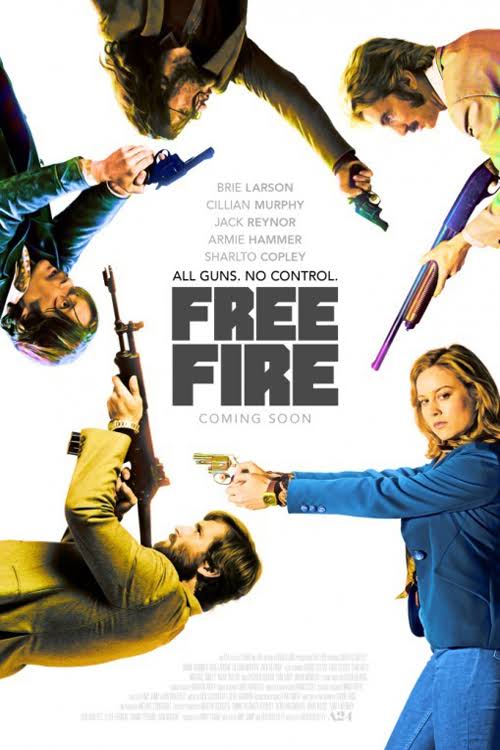
     I wavered a bit on this, whether it belongs here or in the okay category, because there are decent things about it (the conceit of an action film set entirely in one location, some of the action scenes and the sound and acting choices, which make it a little more realistic). However, what put it here was my own lack of enjoyment. One sign that I didn't like this was that I couldn't remember any of the character's names. Not just now, while I was watching the film. There's a big twist at the end, which didn't work, because it involved a named character, who I didn't know. That stems from all the characters basically being the same person. They have no distinct personalities, other than ostentatious clothing and swearing a lot. Because these characters aren't distinct or memorable in any way, I had a hard time caring when the action started. The action is confusing, and you only have a vague sense of what's happening, which I think was the point. The problem is that I didn't care, because these characters were not interesting, and frankly, seeing someone crawl because they got shot, while novel at first, got really old really fast. I've heard this director's other work is good, but this probably isn't one of them. 

Suburbicon
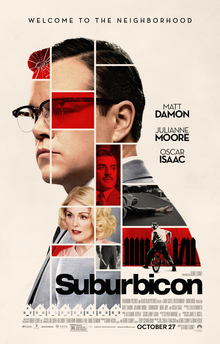
   Did you know this movie had a major subplot about a black family moving into the titular all-white Suburbicon? No? That's because the trailers don't show it, meaning the marketing clearly saw what everyone else did. The integration plot is very awkwardly juxtaposed with the Matt Damon-Julianne Moore plot, they have virtually nothing to do with each other, and they rarely interact. Would it surprise you to learn that this is actually two scripts, one by the Coen Brothers and one by George Clooney and a writing associate, mushed together like Playdo by Clooney. It is just as bizarre as it sounds. The reason it is this high, is that, while it is a definite failure, the sheer scale of this failure is sort of spectacular. This movie was given every opportunity to succeed, with such talent involved ( George Clooney's previous films as director were decent), but it's a complete disaster. It's like if Tommy Wiseau tried to direct a movie about the ills of the 1950's. It's terrible, but it's fascinating in its terribleness. 

Okay

The Hitman's Bodyguard 


     The only thing keeping this off the "meh" list was that it was funny enough. Ryan Reynolds and Samuel Jackson have good chemistry, and they and Selma Hayek have the funniest lines in the film. The problem is that everything else in the film is done very poorly. The action is comparable to Die Hard 5 in its incomprehensibility, and it has severe tonal shifts, from the wacky antics of Reynolds and Jackson to fairly graphic scenes involving Gary Oldman's Belarusian dictator. The plot got a bit convoluted. It might not have an actual good movie, but it is humorous enough that I enjoyed it. 

Kingsman: The Golden Circle


   As someone who really loved the first film, this was quite a disappointment in comparison. Still, in spite of the stalled narrative and the feeling of repetition, I did find enjoyment in this film, and the big action scenes were entertaining. That, and a pretty funny Elton John cameo, were enough to leave this off the bad side of the list. It's not really that disappointing a sequel, but it was still lackluster. 


Molly's Game


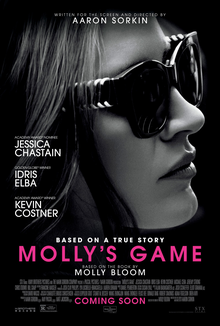
   Another one I wavered a bit on as to whether or not it belonged here or in "meh". I ultimately enjoyed this film, so it came here. Despite its flaws (the occasional Sorkinism, the overlong explanations trying to be "The Big Sick", the overuse of narration and dialogue to convey character traits that should be shown), ultimately, Jessica Chastain and Idris Elba are able to salvage this, and the story is very entertaining. How much of it is true, I can't say, but you know, artistic license and all that. Frankly, my biggest fear (Sorkin unedited is also the preachiest Sorkin) was unfounded aside from two scenes, and he actually is able to convey the story without getting bogged down in its own minutia. 

American Made


   I may have said this before, but I've grown more or less tired of this genre of "guy gets rich off criminal activity, enjoys the spoils, ends with him getting screwed". The problem is how similar these films end up feeling to each other. It's the same story, it's filmed similarly, there are archetypes. This is basically that kind of film, and it's not particularly unique among those films. However, it does have the benefit of Doug Liman  (The Bourne Identity, Edge of Tomorrow)  directing and Tom Cruise once again giving his all. There are some really good flying scenes, and some history behind the 80's drug boom and the CIA's activities in Central and South America during the 80's (even if Barry Seal's involvement in the latter is dubious in terms of accuracy). Of an increasingly tired and cliched genre, this was probably the most tolerable one I've seen in years.

Going in Style

    I wasn't the target audience for this, and I haven't seen the original 1979 film. That said, this was decent enough. The three leads are all hilarious in their own way, are all developed characters, and the plot is interesting in the turns that it takes. I watched it with my dad, who had seen the 1979 film, and he seemed to enjoyed it. I think this is a nice family film for people to watch on a lazy Saturday. I can't say I'll ever watch it again, except in the background.

All the Money in the World
http://t3.gstatic.com/images?q=tbn:ANd9GcRWPRvrJToDBRlmAZA2joRqJhI1ffxvR-Fp3_hfzCPW-8RG7pV6

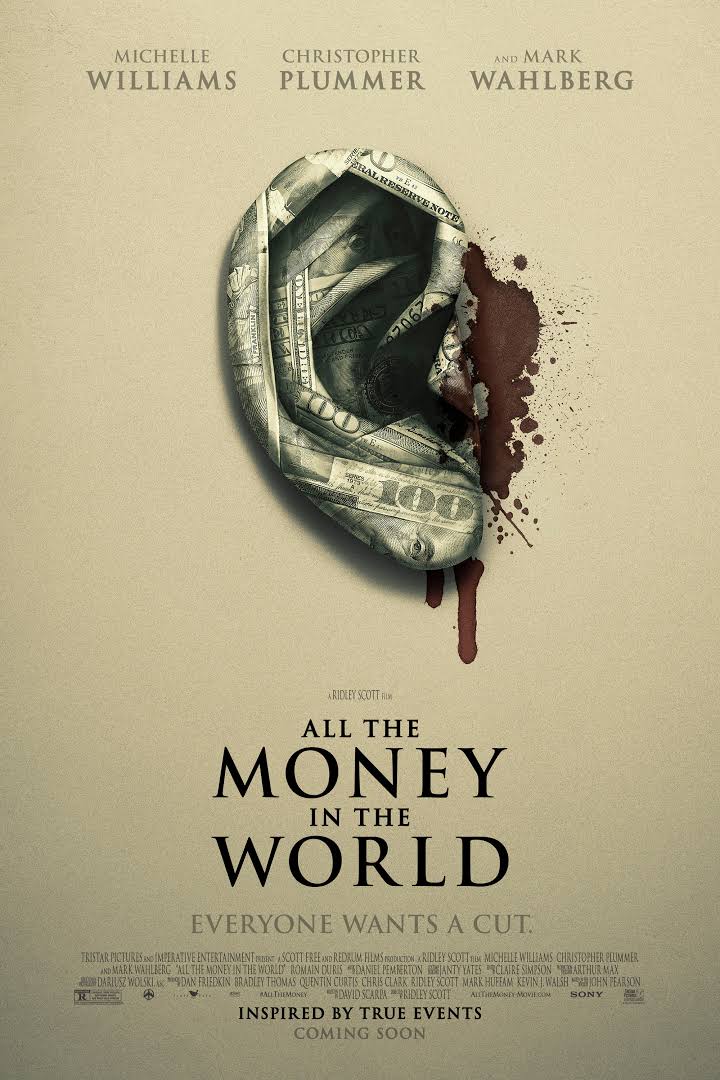
     I admit, I wasn't particularly interested in this film, before the whole announcement that Kevin Spacey was to be completely erased from this picture, and replaced with Christopher Plummer, and still get to the release date. A month before that date. After that, I knew I had to see if that could be pulled off. Having now seen the film, on that front, it is seamless. There is no indication that Kevin Spacey was in the film, and Plummer is placed smoothly in the narrative. Plummer is also great in the role, which he completely disappears into, and has gravitas. The rest of the film around it is fine. Good performances from Michelle Williams and Marky Mark, some good tension, and character dynamics.  It's fine, mostly, and I enjoyed watching it, but I probably won't be revisiting it any time soon.

The Foreigner


  Again, fine. Good turn from Jackie Chan and Pierce Brosnan. A decent, if somewhat outdated, plot with Chan trying to find the IRA members responsible for the bombing that killed his daughter, and Brosnan also trying to get to the bottom of it. Some intense action scenes and some good turns of the plot. Not particularly memorable, but one I could see watching again at some point.

Atomic Blonde

Source:https://static.rogerebert.com/uploads/movie/movie_poster/atomic-blonde-2017/large_kV9R5h0Yct1kR8Hf8sJ1nX0Vz4x.jpg
    You know, the title of this film doesn't make any sense once you've seen the film, considering nuclear weapons don't really factor into the plot. (The Coldest City, the title of the comic it's based off, makes more sense). Regardless, this is very style-over-substance, but in a good example of the genre. Unlike Suicide Squad , the strange editing and tone are actually consistent and work throughout the film. It also has some pretty stylish and unique action to it, which make it stand out. It's plot is incredibly convoluted, yet very predictable, and has that ending that never ends, unfortunately, so I can't fully recommend. Still, it was fun, and I admit, I wouldn't mind seeing it again. 


Good
The Big Sick

    This is a small movie. It primarily focuses on the real life story of comedian Kumal Nanjiani dealing with his girlfriend Emily's coma. It does a fairly good job of showing it, particularly with Kumal's interactions with his own family (and the secret he was dating a non-Pakistani), and his dealings with Emily's parents as they all deal with Emily's Coma. The film primarily works as a nice little story, populated by likeable characters, and imbued with a sincerity and charm to it, one which only increases when you realize it is a true story. 


Spider-Man: Homecoming


    I've been a big Spider-Man fan for a very long time, so I was excited for his entry to the MCU. This was a pretty good introduction to this version of the character. For one, since this character has frequently recited origin, this is not an origin story, but instead a "day in the life" of Spider-Man as he adapts to suddenly being associated with Tony Stark and the Avengers. That was refreshing, and it largely stands as a good film in its own right. That said, it really isn't particularly outstanding in the MCU, nor was it even the best Marvel film of the year. It was merely good.

Kong: Skull Island


   Well, at least, it's title is honest: Kong actually appears in this film for more than 15 minutes. That's one thing it has over Godzilla. While not as good as the 1933 or 2005 versions, this still manages to carve a unique niche in terms of the character, with its early 1970's setting, and its Kong more inspired by the Japanese Kaiju version of the character. It also has some pretty good characters to follow in scenes that don't feature Kong, including good turns from Samuel Jackson and John C. Reilly. After the disappointment of Godzilla, this shows that maybe there is life in this franchise after all. 

War for the Planet of the Apes


In comparison to the other two films, this wasn't as good as those, but this is still pretty good nonetheless. A strong narrative that focuses on war, what life is like under it, and the extreme actions taken during it, it is intelligent, compelling, and very tragic in its dealings. It also expands on the ideas introduced in the previous films, and uses them as the foundations for the society that will eventually be depicted in Planet of the Apes. These are helped by great performances by Andy Serkis and Woody Harrelson, and some excellent effects and action scenes. It is an overall thrilling experience. 

 Murder on the Orient Express
Source:http://t3.gstatic.com/images?q=tbn:ANd9GcQhN5N8AjbsRwE-PkDpWkpfWv5nF7KvTyXAm39-mQ8qnvhbtTDX

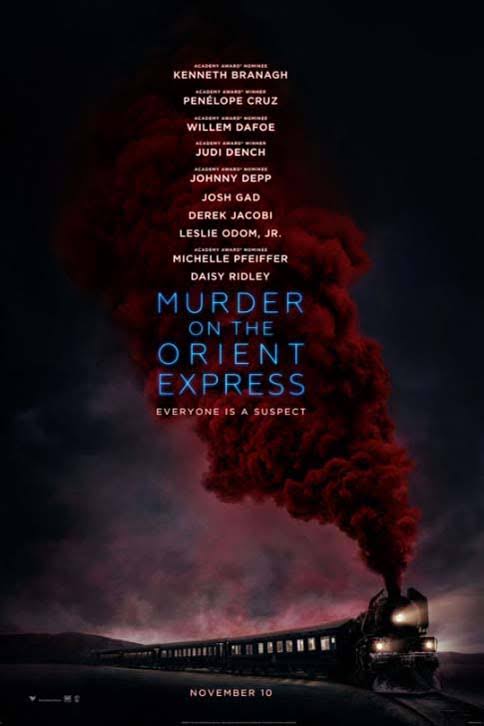
      Having not had any particular familiarity with this book (having only read a summary in preparation for watching this) I can't speak to the accuracy of this film. I can say this was entertaining. All the actors are great in this, especially Kenneth Branagh as Hercule Poirot. It has some good period dressing, and the build-up to the final solution is well-executed. I could tell when things were changed (namely, superfluous action scenes), but it mostly works, at least for someone who hadn't read the book, like myself.

Star Wars: The Last Jedi 
Source:http://t2.gstatic.com/images?q=tbn:ANd9GcRgcIU4MKHZkZNeDt_tAewyfwX7PAmSdj_7wdg_FInkZw8Um9F_

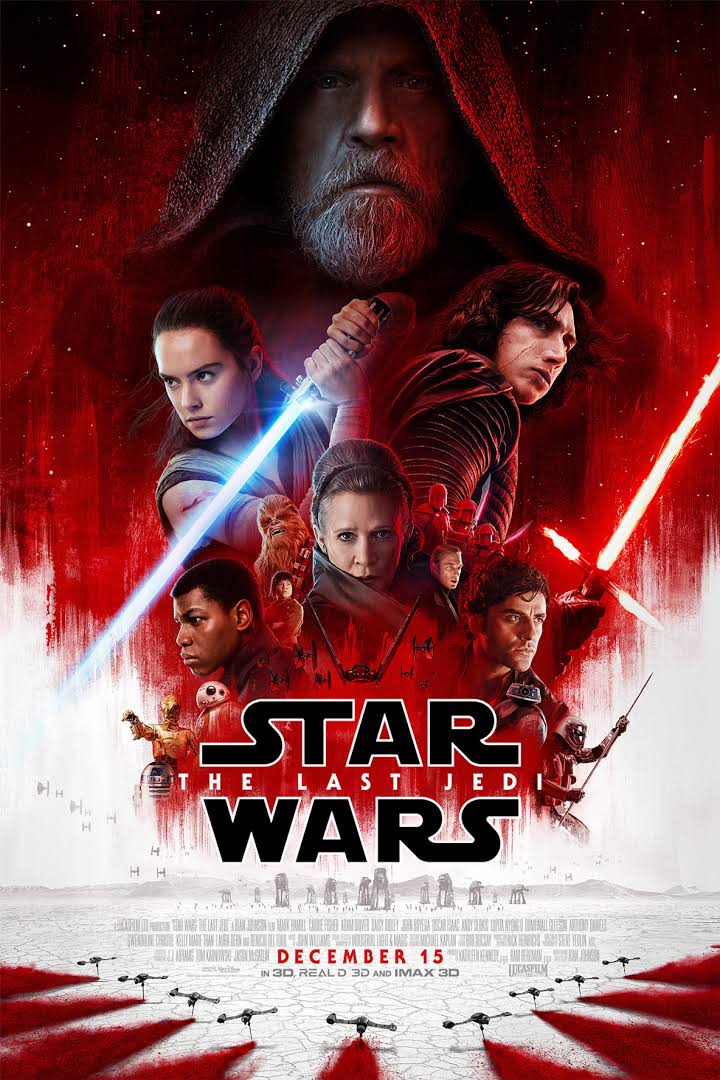
   This is very much the Empire Strikes Back to Force Awaken's New Hope. As such, it is a better film, and a lot more original, both in terms of plot and world building. While fan-service is still there, there is still a legitimately good plot and characters to go along with it, and we see how these characters progress and have changed since the last movie. It also is very tragic, in regards to some beloved figures, both in-universe and in real life. My only criticism is that it was a bit too long, but overall, I found that this was a good film. Since Return of the Jedi was also good, I have a feeling the third one of these might end the trilogy on a high note.

Thor: Ragnarok 


      I liked the visual style of this film. Very 70's, sort of Heavy Metal in terms of design. The humor, while a bit much, was good, and I really liked Tessa Thompson, and especially Cate Blanchett as the villain. I also liked the subtext of the relationship between peoples, societies, and violence. It gives you a lot to think about, and the ending was especially nice and poignant. A nice lead-in for Infinity War. 

It Comes At Night

    This was a tad slow towards the beginning, and the conceit that the audience knows as much as the characters do about the situation perhaps worked better on paper, than it does on film. However, this film was chilling enough for it to work. I was gripped for every last second, and the ending is haunting, especially when it builds on the ideas that the film introduced. It's the sort of film that still gives me chills sitting here writing about it. 

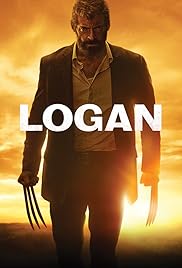
Logan


Source:https://images-na.ssl-images-amazon.com/images/M/MV5BMjQwODQwNTg4OV5BMl5BanBnXkFtZTgwMTk4MTAzMjI@._V1_UX182_CR0,0,182,268_AL_.jpg

   I will not contest the idea that this was a pretty great film. Jackman's final turn as Wolverine shows the actor and character at his most vulnerable, showing the torment and anguish he has suffered through the years with the destruction of the X-Men and the slow extinction of mutants, and how that affects his relationship with what I think is supposed to X-23 (the young female clone of Wolverine in the comics). Patrick Stewart, in his own last turn as Professor X, is fantastic, and he shows why he was so great in this role to begin with. The rustic setting and dark tone are very invocative of where the film is going to go. I do have trouble seeing it as one of the best superhero films of all time (given that other superhero films have also shown this ground). However, I see why others love it, and I really love it too. It is a very fitting final act for these versions of Wolverine and Professor X. 


Dunkirk


Source:http://www.pieuvre.ca/wp-content/uploads/2017/08/Dunkirk.jpg

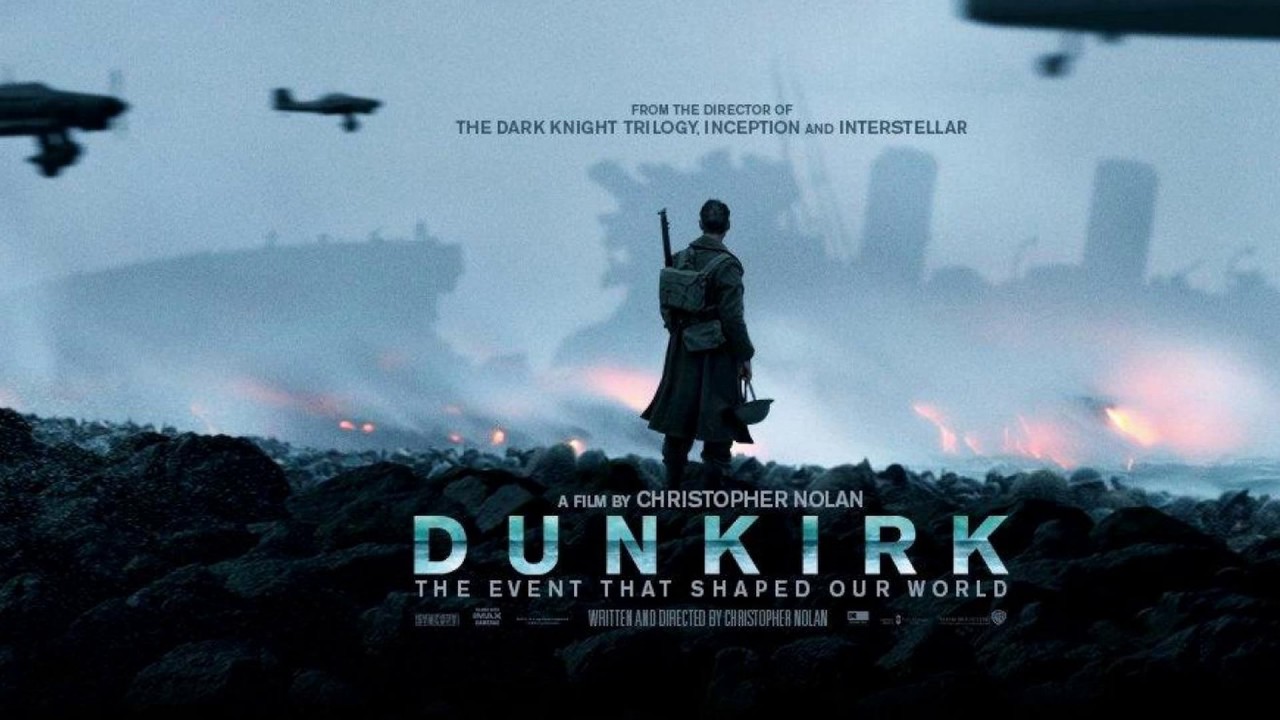
        Aside from the somewhat odd transitions and the sound mixing which makes it a tad hard to hear at times, this was ultimately an intense, interesting experience. Showing three stories set within the Dunkirk evacuation during World War II, it is able to convey these stories with minimal dialogue, while displaying a wide array of emotions and motivations. As someone not into war films, this was a war film that hooked me in. Its scale is so massive, yet it also has a very personal touch to it. This probably one of Nolan's best. 

Logan Lucky

This Oceans- style heist film featuring lower class West Virginians attempting a heist of the Charlotte Motor Speedway could've easily become a put-down and condemnation of the region and its people. However, director Steven Sodebergh (a Southerner himself by origin) manages to make the audience feel empathy for the characters and their plight, by showing the kinds of problems that they deal with on a regular basis, and why something like this is attempted. It also shows genuine affection for its characters and portrays them as extremely skilled and clever in their own. The heist itself is very elaborate and well done, and the ending is pretty happy, all things considered. Even if the elements of the plot turn you off, this will actually somehow win you over. 

The Void


   You can tell how heavily John Carpenter influenced this film. From the Lovecraftian themes to the disturbing imagery to the synth heavy score, this is very clearly influenced by John Carpenter. It works, in that sense. While a bit confusing, and the imagery a bit too much, this is a decent enough riff on Lovecraftian horror, with enough existential dread and cult activity to satisfy dedicated Cthulhu enthusiasts and enough blood and scares to satisfy other horror fans. I could certainly seen this gaining a following in the former circles. 

Blade Runner 2049


   The failure of this was a real surprise to me, given how iconic the original is, and influential and homaged it has become. Then again, the original was actually not very successful at the box office, so maybe this franchise isn't as popular as imagined. Nevertheless, the film is an achievement in its own right. Denis Villeneuve was able to honor the original, without copying it, and build up the universe and its own original story. It works even if you've never seen or know anything about the original.  It's universe is unique and alive, and very alien, yet familiar, helping with the franchises themes of real and "fake" life in the form of the replicants. A shame not many people saw it. 

The Disaster Artist


The Room is a film with not so much as a plot, as a sequence of non-sequiturs and odd filmmaking choices, and the interactions between characters don't resemble that of regular beings. The Disaster Artist by Greg Stestero (who played Mark in the film) was about the making of the film and the bizarre auteur behind it, a mysterious man by the name of Tommy Wiseau.  I read the book, and I admit, I was a tad disappointed that the more insane episode from the book weren't featured in this. That said, this was probably the best adaptation anyone could ask for, managing to capture the insanity of the making of this film, and Tommy Wiseau's unstable nature. James Franco is great, capturing the mannerisms and voice of Wiseau perfectly, to the point where you stop seeing Franco, and start seeing Wiseau. It also explores why the Room is so enduring (a bit too much at times, but that's not here or now), and very piously recreates the footage from the film. For Room fans and non-fans, it is a must-watch. 

It

This was a surprise. Another adaptation of Stephen King (the first from 1990), I didn't know what exactly to expect (maybe a Stranger Things rip-off). What I got was the scariest film I saw in theaters this year. It is intense, and unrelenting in its scares, barely letting you breath before the next scene. It was exasperating. There were flaws, incredibly jarring tonal shifts, and a villain that got sillier and unintentionally funny as the film went on, but those were overrided by the sheer terror of this film. Hopefully the sequel captures that essence well. 

The Lego Batman Movie


The film that finally got me to tolerate Batman again. While not as good or funny as The Lego Movie,  it is still funny, creative, and surprisingly heartfelt. It lampoons Batman and his universe, while paying homage to the character 80 years of history. It also is a nice story about Batman finding a new family. Certainly, a treat for both Batman fans and non-fans alike. And the song at the end is pretty good too. 

Wonder Woman 

All this had to be was better than Batman v. Superman., The fact it ended up as good as it did is nothing short of a miracle. This is the first DCEU film that actually captures what the character truly fought for, and is a good representation of it on film. WW is also the most heroic of any of the heroes in the DCEU so far. It has an good plot that utilize and challenge Diana's values, and show off both her powers and her compassion for others. And unlike other people, I actually did like the villain, and the eventual twist. A sign that maybe DC was getting... and then Justice League happened. 

John Wick Chapter 2

This is the best kind of sequel in that it takes what worked about the original, and expands on it. It basically is more of Keanu Reeves doing elaborate shoot-outs and fights, but in a good way. The film has larger scale fights, a larger international plot and settings, and a larger ending. However, it still has the essential elements that made the first one work. The narrative is very tight and well-paced, the shots are stylish, the action is almost poetic, and the universe is intricate and elaborate. Here's hoping John Wick 3 is as good. 

Baby Driver


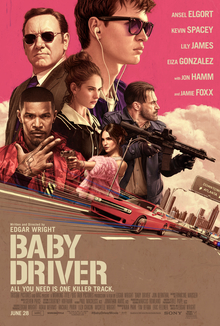
      Edgar Wright manages to take his signature style and flair, and easily applies it to a more straight-forward action film. The film manages to combine Wright's editing with a great soundtrack, which the film actually integrates into the shots and action happening on screen, and a good tribute to old heist and gang movies. Ansel Elgort does well as our hero, and despite being mostly silent, is able to convey a lot of emotion and character. The action is memorable, and the characters each have their moment. I can't say this is Wright's best, but it's right up there. (Though the presence of Kevin Spacey might make it a bit awkward to watch now.)

Coco 

Every time Pixar seems at its lowest (Cars III, which I skipped, came out this year as well), it always finds a way to come out on top. I knew this would be this high when I cried twice during its run time. While the story is a little predictable, it manages to be very poignant with its themes of family and the power of music, as well as staffed with very interesting, memorable characters. This is also one of the most beautiful films Pixar has ever released, with bright colors and unique designs on every corner. While the comparison to Book of Life is inevitable, given their shared themes of Dios de la Muertos and music, this film is very distinct from that one, both in terms of its design, its plot, and especially its strong message about family (which, according to some Mexican viewers, is more resonant with Mexican values than Book of Life's follow your dreams angle). While I may not know much about the holiday of Dios de la Muertos, this certainly was a great holiday film and among Pixar's best.

Guardians of the Galaxy, Vol. II

This was going to be my number for much of the year. While something ultimately beat it out, this still made it this high on the list. Once again, taking what worked about the first film and expanding on it, we see a surprisingly touching and heartwarming film ultimately about family and all the complications relationships it's made up of. Not just blood relations, but the connections that people make that are close to family. Every characters gets a moment to shine, the villain is probably the best in the series, and it still has that great soundtrack (and a joke about Zune at the end, which I didn't get, because I didn't what a Zune was, but whatever.) The aesthetic of the films very much invokes the 70's Marvel Cosmic comics that the original Guardians had come from. The villain (an iconic Marvel character) is probably one of the best MCU villains. It is funny, charming, fun, and very, very sad (it's hard not to cry at the ending.)

Best Film of the Year

The Shape of Water

I see this as less a film and a more a work of art. Everything invokes that style, from the cinematography to the designs of the setting to even the creature itself. It is so beautiful in the way it looks. Guillermo del Toro once again makes a sort of historical fairy-tale, taking the basics of films like Creature from the Black Lagoon , and turning it into a love story. In a sense, it's also somewhat of a live action version of The Iron Giant, except it being a love story Everything is done so well, from the characters to the acting to the writing. Maybe I also have bias, because I am interested in the Cold War period, and this is very much a film set right in the deepest part of it, but the way it integrates that, 60's culture and paranoia into it does help its message about the universality of decency. This was simply a great film, and if you haven't seen it, I implore you to do so. 

-----------------

So, here's to 2018. I hope you have a happy New Year, and I'll see you soon. 


Saturday, December 30, 2017

End of the Year: Documentary Feature

   Often, I always consider putting documentaries onto the end of the year list. I always refrain from this, because I feel that comparing narrative films to documentaries would require a complicated system, due to their vastly differing nature. However, I still want to acknowledge the various documentaries that I have seen this year. And not just those released this year, but just ones I happened to watch for the first time this year. So, here are the documentaries I've seen this year. Not necessarily ones that came out this year, but ones I happen to have seen. These are going to be ordered by means of recommendation, meaning those I recommend the most will be closer to the top, while those I don't recommend will generally go below. So, without further ado....

Tower(2016)


This is the first one, because, of the docs that are going to be featured here, this is the one I recommend the most. This is an animated account of the events of the 1966 mass shooting at the University of Texas at Austin, from the perspective of some who had witnessed it, from students caught in the crossfire to policemen responding to it in real time. These accounts provide a unique perspective of the incident, and shows how confusing and horrifying this situation can be if you're in the middle of it. A good example of this is that for much of the documentary, many recall that they assumed there were two shooters (instead of the one). This documentary brings you directly into the mist of this situation, and shows you its tragedy, but also the heroism that some displayed even in the chaos. In this era of mass shootings, this is a must-watch.

Icarus (2017) 

   The story of how one man's investigation into doping in amateur bicycling and help he receives from a prominent Russian anti-doping doctor ended up with that man stumbling onto a massive doping conspiracy by the Russian government is an interesting thriller in and of itself, before you remember that it is a real, ongoing story. It is eye-opening as to how pervasive this really was, and disturbing how intricate it was planned out with. It is a great expose on this issue, and with recent actions by the Olympic Committee, it is still an ongoing story.

OJ:Made in America (2016)

   This is an excellent companion piece to The People v. OJ Simpson. Made for ESPN's 30 for 30, it doesn't just cover the trial, but also is a comprehensive look into OJ's entire career, from football to Hertz spokesman to film star. It looks at how he had effectively been accepted by white America by assimilating and declining to get involved with African American causes. This would prove ironic when race would play a large factor in his trial (set in the backdrop of the aftermath of the LA riots). It also shows his life post-trial, and how he gradually alienated everyone who had stuck by him, even during the trial. It shows how OJ's life and career occupied a unique position in the intersection of race, celebrity, and sports during the late 20th century, and all three came to affect his life and his murder trial. This is perhaps as comprehensive as you could get with a documentary.

Red Army (2014)

   If you've seen Icarus, the revelations in that might put a damper on this documentary about the Soviet national hockey team, especially since the focus, Viacheslav "Slava" Fetisov, was apparently chair of the World Anti-Doping Agency. Still, this is a fascinating look into the Red Army Hockey Club and Hockey in the USSR in general, as recounted by Slava and some of the players themselves. It looks into the infamous unbeatable team, and explores how they got to be that powerful. However, there are also dynamics with a brutal coach and a authoritarian government which looms over their shoulders and tries to limit their interactions with the Capitalist west. Even if you have no interest in hockey, it is still an interesting history documentary on a very popular sport in the USSR

Jodorowsky's Dune(2013)

   Earlier this year, I read a book called "Shock Value", about the 70's horror renaissance. It was a decent enough book, and provided some good information about some of the classics from this era. I bring this up, because the book focused primarily on Dan O'Bannon, writer of Alien, and his involvement with Alejandro Jodorowsky's ultimately doomed adaptation of Frank Hubert's Dune was chronicled briefly. I remembered that's the focus of this documentary, and decided to pick it up. I'm glad I did. It is an interesting look into the process of making a film like this, and how people are brought together to make a film, and how it eventually can peter out from one thing or another. O'Bannon, French comic artist Moebius, HR Giger, and even Salvadore Dali were all involved with this film during it's production.  In some way, despite never actually being made, it was influential in its own way, with the former three mentioned going on to create the Alien franchise. The designs Jodorowsky and Moebius created are alone good recommendations to see this film, but it is also a fascinating look into what might have been. And, while it might have been an unwatchable mess, I am interested in seeing what might have been with this film.

The Farthest: Voyagers in Space (2017)

Released on PBS to honor the 40th anniversary of the launch of the Voyagers, this is a comprehensive look into the program, exploring its origin, how it was build, the composition of the Golden Record, and its eventual launch. It explores how scientists and engineers were able to overcome obstacles and problems during the production of the two crafts, and be able to launch this craft. It also explores how it made its various scientific discovers, and the sacrifices in other areas to make those. This is a fitting enough documentary to explaining the continuing endurance of the crafts after 40 years, and how they became the first man-made objects to leave the Solar System. The usual great PBS science documentary.
Sembene!(2015)

    I had really no knowledge of the subject of this documentary aside from a short skim on his Wikipedia page when I came across it, nor did I have any familiarity with African cinema in general. It certainly was enlightening in that regard, and I learned a lot about both subjects. This documentary on the radical Senegalese filmmaker Ousmane Sembene is in part an examination of his filmography, and his friend and biographer Samba Gadjigo trying to contemplate Sembene's legacy and their own personal friendship. It is a fascinating look into a man whose work captured the attitudes and problems facing post-colonial Africa, as well as a look into a region that is often neglected in world cinema. If you're interested in either, I do recommend seeing this film.

Five Came Back (2017)

   Netflix's much vaunted WWII documentary sees several filmmakers (among them Steven Spielberg, Francis Ford Coppola, and Guillermo del Toro), discuss other filmmakers (William Wyler, John Huston, and Frank Capra for the three listed) participation in the "Motion Picture Unit" of the US Army during World War II. It explores each of the filmmakers, what their careers were up to that point,  how they added their own unique perspective and experiences during their service, and how it affected each of them after the war had ended. Whilst the "famous directors talking famous director" is a bit gimmicky, the actual stories are each unique and interesting in their own way, and sort of encapsulate the American experience on both fronts. If you're into World War II, this'll provide a less explored topic in most histories of the war.
June 17th, 1994 (2010)

Another 30 for 30 about OJ, though this takes a completely different route. It intersects coverage of OJ's chase in his Bronco on the titular date with other sports events happening that day. These range from Golf master Arnold Palmer's final round at the US Open, New Yorkers celebrating the victory of the Rangers in the Stanley Cup, and the Game 5 of the NBA Finals between the Houston Rockets and the New York Knicks. This admittedly odd conceit actually works well in terms of juxtaposition, showing the relative tranquility of Palmer's round or jubilation at the Ranger ticker tape parade with the tension from Simpson's chase. It especially works when the clips start to interact, with newscasters (including Bob Costas) at the NBA finals determining how to cover the OJ chase in the midst of the game. A fascinating and effective experimental documentary, I certainly do have the inclination to watch it again.

Exporting Raymond (2010)

    This was the last doc I saw this year (having only seen it hours ago). It looks at Everyone Love Raymond creator Phil Rosenthal's attempts to adapt the show for Russian audiences, and the enormous difficulties that he faces. He finds that some themes that he thought universal were actually quite hard to translate in some culture, but other themes and ideas (especially the persistence and interference of network executives) are actually universal. It's a good look into how television shows like this are produced in Russia, and how shows like Raymond are adapted for non-American audiences. Just as someone interested in how American ideas are adapted by non-American cultures, that was probably the best part.

An American in Madras (2013)

    Despite being half-Tamil myself and both my parents having come from Tamil Nadu, I have little knowledge of Kollywood, or Tamil film industry. That was perhaps why this was more of a personal enlightenment. Ellis R Dugan was an American filmmaker who found himself in India, and worked in Tamil Nadu for over 15 years, directing many very popular films with some of the biggest Tamil stars. When I watched the film with my mother, while many of the films had been before her birth, and she didn't know Dugan by name, she had recognized a lot of the actors and the songs. (The former because a lot of them ended up becoming political figures in the state). It was a nice look into a part of the history of what is essentially my ancestral region, and a little bit more on the history of Kollywood. Even you aren't Indian or Tamil, it still is pretty interesting story about an American making films in a foreign country.


The Lovers and the Despot (2017)

I wrote an entire review about a book I read on this exact topic (The kidnapping of South Korean director Shin Sang-Ok and his actress wife Choi Eun-hee by Kim Jong-Il), so I knew the story of this pretty well. While it was nice to hear Choi describe her experience, along with friends and associates, the doc's leading problem is a lack of details. Even if I didn't know this story, that part would've still bothered me. There is little on the films made by Shin during their captivity, or any details on how Kim Jong-Il was, or why he kidnapped them. Granted, yes, it can't be as detailed as a book, but the lack of substantive detail  is apparent. Still, if you want the basics of this strange story, I think this'll do nicely. 

Ghosts of Ole Miss (2012)

   Another 30 for 30 (spoiler, the next is also a 30 for 30) dealing with the successful Football season for the University of Mississippi team in 1962, which corresponded with the riots surrounding James Meredith's enrollment into the University (the first African American to do so). It is an decent enough recounting of both events from many of the participants (including Meredith himself), but aside from one instance of Meredith not being able to attend a Football game, the two don't really interact in a significant way. It feels like just two events that just happened to be around the same time, and the filmmaker is trying to derive some meaning from that, rather than treat it like a coincidence. Maybe if perspective was exchanged on the issues, it could've worked, but it felt off as is.

The U (2009)

    The final 30 for 30 for this year, this is about the University of Miami's football team during the 80's, and how it went from an underfunded operation to a very successful team. It was also ostensibly using that to explore Miami during the 80's, and how the team became an icon, but in practice, it mostly focuses on the team and its successes and failures. That is fine, but I felt the occasional intersections of Miami culture was a bit superfluous. It was just me, it is perfectly serviceable and accessible to a non-sports fan.
Lost in La Mancha (2002)

This is close to the bottom, because I couldn't finish it. Unlike the surreal, detailed, and fascinating look into an unmade film like Dune above, this look into the making of Terry Gilliam's unfinished adaptation of Don Quixote (called The Man Who Killed Don Quixote) was not particularly interesting. It was intended as a making-of feature, which it feels most like, but that works best for a film that's actually finished. It works significantly less knowing that the film isn't finished. Maybe the part I didn't see would've been actually had some intrigue, with production ultimately stalling the film until this year (editing was finished on the film just last month), but the beginning was not promising. Who knows, maybe if the finished film is good, I'll go back to this.

Voyeur (2017)

    I'll admit, there was one primary reason I watched this: the events depicted (Gerald Foos, owner of the Manor House Motel, spying on his guests through a system of fake vents) happened near where I grew up.  The motel is demolished now, but I easily could've driven by it at some point. So, imagine my surprise when it turned out to be more about famed journalist Gay Talese writing first a New Yorker article and then a book on Foos. That should've been a sort of interesting look at how these sorts of articles are written, but this feels off. That might be because it seems to play devil's advocate on Foos (the only reason he isn't being prosecuted for what he did is the statue of limitations), which doesn't exactly put Talese himself in the best light. It probably wasn't intended by the creators, but comes off that way to the viewers. Also, it doesn't really much actual fact-checking aside from one episode where Talese is confronted by a Washington Post reporter, who challenges the account, which is resolved quickly off-screen, but highlights that little fact-checking was shown on screen. As a result, it feels  insular and fishy, and even if all of it was true, it still probably should've acknowledged Foos' behavior more as creepy and, you know, illegal. That is probably the main reason it is the lowest one in terms of recommendation.

-------------------

So, yeah, all the documentaries I saw this year. I hope you  seek out some of these, and join me in the next few days as I rank the films of 2017.


Saturday, December 2, 2017

Current Film Reviews: November Criminals

    There is one, and only one reason I decided to watch this film. Despite the fact it has been available on demand for a few weeks, only now have reviews appeared. My sister has surmised that it was because it wasn't out in theaters. That is likely true, but it seemed odd that no one was talking about a film that has technically already been released. I mean, you could buy or rent this film, and watch it beginning to end. The trailers were savaged for their seeming portrayal of a typical white savior narrative (which, having watched the film, it is, spoiler), but only now have two actual reviews come up in preparation for the release date next week. This, despite widespread availability since Nov. 7, apparently made so little of an impression on the culture. And I could see why.

     Based on the book by Sam Munson, we follow the story of Addison Schacht (Ansel Elgort), who we see dropping off his application for the University of Chicago with his female companion Phoebe or "Digger" (Chloe Grace Moretz), with 22 pages in response to the question "What are your best and worst qualities?" I don't know why that was particular germane to the rest of the film, but we continue as they travel to their favorite hotspot in Washington DC. There, Addison and Digger met their friend, Kevin Broadus (Jared Kemp). When they leave, however, someone walks into the coffee shop, and kills Kevin. Addison hears a brief remark about this being gang-related, and, deciding that nobody is paying attention to this story because of this (despite the extensive coverage on the news and the police investigation, and the fact that a detective later tells him they don't know if it is gang related, and apparently haven't heard testimony from any of his other friends), decides to investigates his death. This  investigation ... doesn't actually go very far, but it apparently brings him and Digger into the brink of danger. Apparently.  (the danger is not that apparent)


     This film is.... in focus. You can tell what is happening. Chloe Moretz and David Straithairn (who plays Addison's dad) are decent in their performances. It was coherent in terms of narrative and cinematography. I don't really know what else is okay.

     Where do I start? Well, you could tell by my larger than normal snark in the synopsis that the plot isn't that good, primarily relying on "show, don't tell", (because based only on what they show, the plot would not be able to happen otherwise), and relies on contrives and the main character not thinking for 5 minutes. It could've worked if (Spoiler) He decided that it was not his place to investigate, and try to handle the grief in a way that he could understand that some things he can't control, like was implied with how he deals with his deceased mother. But no, he manages to solve it (accidentally, because, once again, he doesn't think), and it turns out well for him.  Oh, yeah, and that U. Chicago application is completely tangential to the proceedings. I heard that was the center of the entire book. I feel like it should've been something that the events of the film could've built up to.(Spoilers) Ansel Elgort decides to piss away the goodwill he received for Baby Driver by giving a non-committed performance full of "dull surprise" expressions. He and Chloe Moretz have no chemistry, and their attempts at romance are painful to watch. It's only an hour and 25 minutes, but it feels so much longer, with the tedium of him tepidly investigating and constantly (and rightly) being told not to. Simultaneously, because of the latter, it feels like nothing really happens until the final act. Nothing was accomplished by Addison, except when he stumbles on it. There are shots in the film that, in theory, should work, but are so mangled, they become unintentionally funny. The director is competent, having helmed a pretty good retelling of the making of Psycho in 2012's Hitchcock , but here, when it's not interesting shots done wrong, it's mostly generic looking and feeling.  As for the white savior narrative, yeah, while some of those complaints are exaggerated (one of them from the The Mary Sue claimed that Addison gave Kevin a book in the trailer because that is what a white person does to uplift a black person in a white man's burden narrative. In the actual film, they're exchanging books, with Addison giving Kevin the Aeneid, and Kevin giving Addison a James Baldwin book), but their basic complaint is true. Kevin is a driving force for Addison, less in the sense of a friend trying to honor a friend, as the movie seems to think, but as a way for Addison to self-actualize through the experience. This line from the Mary Sue article I linked is particularly prescient: "That friend is played by Jared Kemp, who is billed so low on IMDB it’s hard to imagine he’s more than a featured extra in his own story." That is very, very true. The character of Kevin Broadus appears in the film just as much as he does in the trailer, despite his centrality to the plot. We don't see or know much about him from observation, except how Addison is affected by his death, and his own friendship. Once again, it is less about the black person killed than how his white friend was affected by it. It leads to a larger problem with the film. None of the characters are well-developed. That whole "show, don't tell" problem is very apparent, where we are told things about characters, instead of them being shown. As a result, the events hold little interest, because these character don't resonate, and what happens to them doesn't really have any impact on the viewer.

      Based on the fact it was released on video on-demand before theaters, I was expecting some sort of complete disaster. A fascinatingly bad film with A-list talent (the way Suburbicon was a couple months ago) that Sony clearly thought a dud, and wanted some money back on. This is not it. Oh, it's certainly a dud, but it's not interestingly bad. It's just boring and awful, to the effect of a really bad TV movie. I certainly cannot think of any reason to see this, especially in the theater. If you're still interested, it's still available on Google services, so just watch it there. But don't watch it. This was fun, though. Exposing an obscure film , despite finding it terrible.

Friday, December 1, 2017

Current Film Review: Justice League

    You know, I had higher expectations for this film. Wonder Woman was good, and Joss Whedon was brought in help with the reshoots, following an incredibly tragic death in director Zac Synder's family. Whilst the trailers weren't impressive, it didn't seem like the disasters that Man of Steel, Batman V. Superman, and Suicide Squad turned out to be. Maybe they were starting to get the idea. Maybe this would continue the streak Wonder Woman started. Maybe they could create a viable cinematic universe. After seeing the film.... Let's get this over with.

       Based on the DC team created by Gardner Fox, we start immediately after the events of BvS. While the world is in shock following Superman's (Henry Cavill) death, Batman (Ben Affleck) is seeing strange creature appear across the world, and trying to assemble a league of heroes with Wonder Woman (Gal Gadot) to try to protect the Earth from impending threats. This includes Arthur Curry, alias Aquaman (Jason Mamoa); Barry Allen, alias Flash (Ezra Miller); and Vic Stone, alias Cyborg (Ray Fisher).  Sure enough, Steppenwolf (CiarĂ¡n Hinds), a member of the New Gods (Jack Kirby's group of powerful beings in the DC universe) and commander from Apokolips (in the comics, the realm dominated by Darkseid), comes to Earth to gain the three Motherboxes, which he had previously fought a war on Earth with the power, only for an allaince of humans, Amazons, Atlantians, Green Lanterns, what have you, and which have reactivated with Superman's death. Now, Batman and Wonder Woman must assemble the League and stop Steppenwolf from gaining the three Motherboxes. They may even get some help from beyond the gra.... Okay why do I have to treat that like it's a spoiler. It was obvious this was going to happen, but...

        Good things: Ben Affleck and Gal Gadot (as they were in the last film), Ray Fisher as Cyborg, Ezra Miller (in parts) as the Flash, decent McGuffin, creative creature design, some decent fight scenes, some good jokes (likely the product of Whedon), a decent enough homage to a classic comic in one of the, oh yeah, there are two after-credit scenes for this. Some nice nods to the DCU.

       The main problems with this film are the same problems with Batman v. Superman and Suicide Squad. Like BvS, it is boring, a slog that drags on too long with its portentous alleged grandiosity. Despite the use of iconic characters and settings from a shared universe with large history, it just doesn't click on screen, with its action scenes simply not illiciting excitement and its character moments either clearly cut down, or pretentious. The overuse of CGI doesn't help in the former's case. It resembles a DC video game at times. Not even a modern one. One that might have been on the Playstation 2. Which brings me to the Suicide Squad comparison, which involves very heavy studio interference. It is abundantly clear this was hacked up by the studio after Whedon finished the reshoots and editing. Like Suicide Squad, this makes the film very haphazard, going from a sequel very much fitting in the universe of the previous films, to an Avengers-style character romp. It's jarring, and the retouched shots, like the bad CGI, create a very ugly looking film. It looks low budget, which is not a criticism that should not be for a film that cost $300 million to make.

       This was not as bad as Batman v. Superman or Suicide Squad. That's not an endorsement, given that this was merely bad, as opposed to inconceivably awful. If you, for whatever reason, liked the other DCEU films, you might like this. If you didn't, but Wonder Woman got your hopes up, well, it turned out how you expected. I really don't have much else to say. This was like cold, stale oatmeal. It was bad in a generic, forgettable fashion.

     I am going to do a double feature, because I want to share with you something that I had found. A film that has technically has been released for several weeks on the internet, but is only now getting reviews ahead of it's theatrical release. The November Criminals. Never heard of it? Well, let us take a look into it.

Saturday, November 25, 2017

TV review: "Rick and Morty, Season 3" and "Stranger Things 2"

  Today, I'm going to do something a little different. I'm going to review a television series. Two in fact. A quick change of pace for the holiday season. This will also have a different structure than my other reviews, in that I'll do more of a stream of consciousness, as if I were talking off the top of my head. If it comes off disjointed, I apologize. Rest assured, my normal reviews will return very soon, but for now, let's dive into Rick and Morty, season 3, and Stranger Things 2. Oh, yeah, obviously, this will contain spoilers for both shows. Non-spoiler version, I did like both of these seasons, and I would recommend seeking them out (though if you haven't seen the shows, watch the previous seasons to catch up).

 Rick and Morty, Season 3

After the whole Szechuan Sauce debacle, I decided to wait a bit to this. Just let the dust settle. With that out of the way, Season 3 started out well, went down hill, had a really good middle part, and ended on a low note. I'm guessing a lot of "Top 10 Worst Rick and Morty episodes" lists will contain a lot of season 3 episodes, because of the three seasons thus far, this has some of the least good episodes. However, there are big highlights from this season, which save it from being a complete disappointment. My favorite episode of the season, as with others, is the "Ricklantis Mixup", whose anthology structure and world-building were a good change of pace, and an interesting look at things to come with it's ending. It provided good self-contained stories as well. My second favorite was probably "Rest and Ricklaxation", simply because it was very funny and had something substantive about Rick's character, which was not revealed earlier. Third is the "Whirly Dirly Conspiracy", another funny one with an inventive setting and a good B-Plot. The worst episode is "Vindicators 3: The Return of Worldender", simply because it was not funny, and it wasn't even a good superhero spoof (it relied more on expressing the most cliched, most common complaints about the genre through Rick, instead of actually parodying it.) I was disappointed that more stuff from the actual comic books (which has material for parody in abundance) wasn't used, instead, once again, focusing on cliched (and sometimes completely inaccurate) complaints about the films. The second worst is "Rickchurian Candidate", which was completely disappointing as an finale, considering it feels, aside from Beth and Jerry getting back together and the entire family turning against Rick, like nothing was really accomplished. No story was really wrapped up, aside from the arc of Rick gradually destroying his family finally coming back to haunt him. Third is probably "The ABC's of Beth", which wasn't funny, and had a very forced ending, instead of one that naturally came from Beth's characterization and the events of the episode.

Whenever I talk about this season, I usually compare it  to the later seasons of Community, another Dan Harmon show. The problems with Community as it went on are, well there are two major problems. Inconsistent character development and an increased reliance on being subversive for the sake of being subversive (instead of it  serving a purpose), and an overt insular self-referential nature. Neither of these are huge problems with this season, but they are elements one can discern. Much is made of Rick being "too powerful" and almost never suffering consequences. I think those criticisms miss the point. He is god-like. That's the point. He is less a man, and more a force of nature. The real after-effects come to the people around him. Morty is gradually desensitized to the horrors he is regularly exposed to, and is disillusioned by his adventures. Summer is becoming more and more cold and methodical in her demeanor, much like Rick is. And of course, he purposefully broke up Beth and Jerry's marriage. However, while these characterizations hold for most of the season,there are moment where they more resemble their season 1 and 2 counterparts (most notably, Summer in "The Whirly-Dirly Conspiracy"). Beth and Jerry suddenly having a moment, and getting back together feels forced, and unsupported by the rest of the season. It feels inconsistent, however, most with Rick. While his power is part of the point of his character, I feel like the season opener was hinting that Rick was going to be a darker, more sinister character, and while that is hinted at a few times, he really is no more bad than he was in the past seasons. This season didn't really have much self-reference (and those moments worked, like in "Ricklantis"). However, that smug "subversiveness" is very present in this season. The show is good at subverting traditional sci-fi plots, that's the whole point of show. However, the subversion of "this seems important, but it's actually pointless", seems like Harmon is trolling the audience. The problem with this is that, while the show aspires to have a strong narrative undercurrent, continuing subverting it or not following up on characterization stalls that narrative and makes the viewer feel like nothing was accomplished.

Am I excited for the fourth season? Yes, I am. I didn't hate this seasons, but I'm worried the show is going into the same rot that affected Community. Granted, it's animated and science fiction, so if it goes off-the-wall, it's fine, but the same sort of insularity and increased focus on fan-pleasing, than on actually moving the narrative forward with these characters. Hopefully, I'm wrong, and am able to actually follow this to the end (instead of give up as I did with Community.

Stranger Things 2

This was pretty good, though not as good as the first season. I honestly thought I'd have more to say, but that's really the gist. Favorite episodes feels pointless here, because this is more of a serialized TV show with an ongoing plot, so any individual episode works mostly on how it fits into that narrative. Once again, it manages to supplement nostalgia for 80's horror and science fiction with a legitimately engaging narrative and likeable characters. I enjoyed this season's new addition of Max and her budding romance with Lucas. Oh, yeah, with romance, I disliked the love triangle (sort of) between Nancy, Jonathan, and Steve. It felt like a repudiation of what made their arc in the first season work, which rejected the traditional way these stories end.

I liked that there were more 80's references in this. The first season, the only one I could think of was The Thing, but they had more references, and it feels more in setting, with the arcades, and the new movies from '84 like Ghostbusters. Normally references are grating for me (*Cough* Ernest Cline), but it works here as setting dressing. It also helps the plot doesn't rely solely on references, but uses them as foundations for a larger villain. Oh, yeah, I really enjoyed the twist where it turned out the creature was so massive, that it is essentially everything that has been seen (the cave, the little creatures, the cells inside Will).

On the controversial episode 7, I enjoyed it. It may not have had anything to do with the rest of the story, but it was a nice sojourn towards a more urban setting, and it provided a little more motivation of Eleven to come back. It seems like a backdoor pilot, for a later arc. And I did enjoy these characters, and do want to see more of them when the time comes.

Not much else to say. I enjoyed this, and if you enjoyed season 1, you'll definitely like this.

----------------------

So, that was fun. If a new season of a show I've following comes out (I don't really watch that many shows), I might do this again. For now, I will be reviewing Justice League in the coming week.